| Unsung local artist |
|
|
|
| Written by June Pitcher | |
| Friday, 04 April 2008 | |
|
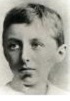
Harry Bates was an important figure of the late nineteenth century movement called “The New Sculpture”, in which the human form was treated in a naturalistic way, the effect being a dynamism lacking in the bronzes and marbles of most Victorian sculpture. Born in Stevenage and educated at Alleyne’s Grammar School, he became an architect’s clerk, progressing to a London apprenticeship as an architectural sculptor. His modest origins – a Stevenage family of building contractors – meant that only in maturity was his talent recognised.In 1883 he won the Royal Academy’s Gold Medal and a travelling scholarship. He then spent two years in Paris, studying with both Auguste Rodin and Jules Dalou. In the 1870s Dalou had been an influential sculptor and teacher in London. Harry Bates created fine reliefs in bronze and marble. You can see a bronze in the Victoria and Albert Museum; it is called “War” and depicts the incident in Homer’s Iliad where Hector says farewell to his wife, Andromache, and their child. A panel beneath displays the New Sculpture’s affinity for vigorous action – a chariot at full gallop. Bates designed a number of public monuments. The most important was that of Field Marshall Earl Roberts, a distinguished and popular general, who rode an Arab grey (Volomel) as famous as himself. You can see the statue of Volomel on Horse Guards parade, arching his neck and swishing his tail, with Roberts like a centaur on his back.
The original of this work is in Calcutta and there is the copy, shown above, in Glasgow, near Kelvingrove, but the London memorial was placed in1924, at the insistence of Roberts’ daughter, who would agree to no other sculptor.
Bates’ tomb is by the main path in St Nicholas’ Churchyard in Stevenage. It is decorated by a floriated cross.
|
|
| Last Updated ( Friday, 03 October 2008 ) |
| < Prev | Next > |
|---|